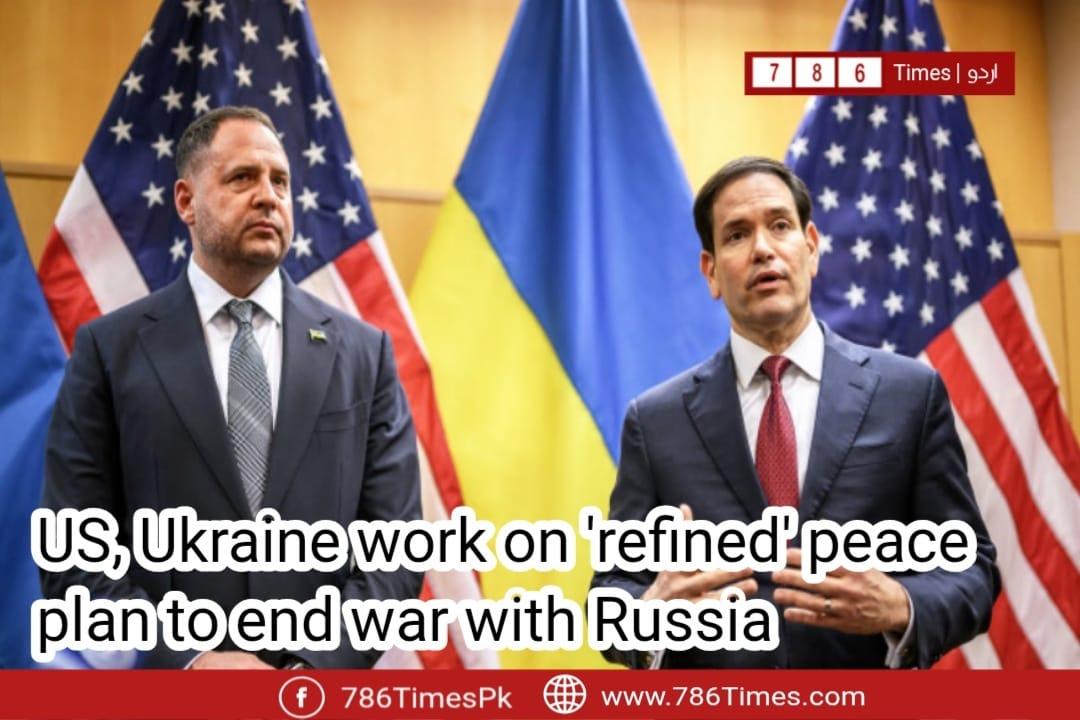
US-Ukraine Draft ‘Refined’ Peace Framework: What It Means for Russia, Europe, and Global Security


US-Ukraine Draft ‘Refined’ Peace Framework: Global Implications for Russia, Europe, and World Security
The announcement of a US-Ukraine refined peace framework in Geneva has sparked intense debate across continents. This framework, designed to secure Ukraine’s sovereignty and redefine the balance of power in Europe, is not just a regional initiative—it is a global recalibration of security, diplomacy, and economic stability. With Russia, Europe, China, Africa, and the United States all watching closely, the framework could mark a turning point in international relations.
For readers seeking deeper context, explore our related coverage on international relations, global security, US foreign policy, Russia-Ukraine war updates, and European Union news.
Background: Why a Refined Peace Framework?
Since the outbreak of the Russia-Ukraine war in 2022, multiple peace initiatives have failed. The refined framework represents Washington’s attempt to consolidate diplomatic efforts, strengthen NATO’s credibility, and provide Ukraine with a roadmap toward sovereignty and reconstruction. Unlike earlier proposals, this framework emphasizes long-term guarantees rather than temporary ceasefires.
Russia’s Position and Strategic Challenges
For Russia, the framework is both a diplomatic challenge and a geopolitical threat. Moscow has long sought to maintain influence over Ukraine, but the refined plan directly undermines that ambition. If Russia rejects the framework, it risks deeper isolation, harsher sanctions, and a weakened global standing. Accepting it, however, would mean conceding ground on Ukraine’s sovereignty—a move that could be politically costly for the Kremlin.
Europe’s Security Architecture
Europe stands at the center of this framework. NATO allies view the plan as a chance to reinforce collective defense and prevent future aggression. The European Union, meanwhile, sees it as an opportunity to stabilize energy markets, secure trade routes, and strengthen political unity. The framework could reshape Europe’s security architecture for decades, ensuring that Ukraine becomes a fully integrated partner in the Western alliance system.
Global Security Dimensions
The framework’s implications extend far beyond Europe. China is closely monitoring developments, weighing its own strategic interests in Eurasia. Africa, often overlooked in discussions of European conflicts, is watching for lessons in sovereignty, resource security, and diplomatic leverage. The United States hopes the framework will serve as a model for conflict resolution worldwide, reinforcing its leadership in global security.
China’s Perspective
China’s role is complex. On one hand, Beijing has maintained ties with Moscow, offering diplomatic cover in international forums. On the other, China values stability in global trade and energy markets, which are disrupted by prolonged conflict. The refined framework forces China to balance its partnership with Russia against its broader economic interests.
Africa’s Viewpoint
African nations, though geographically distant, are deeply affected by the war’s consequences. Rising food prices, disrupted grain exports, and energy shortages have hit African economies hard. The refined framework offers hope for stability, but African leaders remain cautious, wary of being sidelined in global negotiations. Many see the framework as a test case for how international diplomacy can address conflicts that ripple across continents.
US Foreign Policy and NATO’s Role
For Washington, the refined framework is a demonstration of strategic leadership. It signals that the US is committed not only to Ukraine’s sovereignty but also to the credibility of NATO. By embedding long-term security guarantees, the framework reassures allies that the US will remain engaged in Europe’s defense. NATO’s role is equally critical, as the alliance must translate diplomatic commitments into military readiness.
Economic Implications
Beyond security, the framework carries significant economic consequences. Europe’s energy markets could stabilize, reducing dependence on Russian gas. Ukraine’s reconstruction could attract global investment, creating opportunities for infrastructure, technology, and agriculture. For Russia, however, the economic outlook is bleak: sanctions will tighten, and its access to Western markets will shrink further.
Diplomatic Reactions Worldwide
Global reactions to the framework have been mixed. European leaders largely support it, seeing it as a path to stability. Russia has condemned it, framing it as Western interference. China remains cautious, while African nations call for greater inclusion in negotiations. The United Nations has welcomed the initiative but emphasized the need for genuine dialogue between all parties.
Future of International Diplomacy
The refined peace framework is more than a regional plan—it is a test of international diplomacy in the 21st century. If successful, it could set a precedent for resolving conflicts in Asia, Africa, and the Middle East. If it fails, the consequences could be severe: prolonged war, fractured alliances, and weakened global institutions.
Conclusion
The US-Ukraine refined peace framework is a bold attempt to reshape global security. Its success depends on the willingness of Russia, Europe, and other global powers to engage in meaningful dialogue. For Ukraine, it represents hope for sovereignty and stability. For the world, it is a reminder that peace is not just a regional aspiration—it is a global necessity.